Crack Repair — Southern Arizona
Concrete Crack Repair Across Southern Arizona — Stop a Hairline Crack Before It Spreads
A crack that looks cosmetic in April can be a monsoon-fed trip hazard by September. We route, seal, and — where needed — structurally stitch cracks before the region's swell-shrink soil cycle turns a small repair into a big one.
Why Southern Arizona concrete cracks the way it does
Most residential cracking here traces back to the same underlying cycle: caliche hardpan blocks water from draining downward, so monsoon runoff saturates the clay and silt sitting above it. That soil swells when wet and shrinks again once the region's long dry stretches return — and the concrete on top gets stressed by every cycle.
The pattern is seasonal and predictable. Cracks that were hairline-thin in June often widen visibly after a hard monsoon storm in July or August, then seem to stabilize again through the fall and winter dry season — until the cycle repeats the following summer. Left alone, each cycle works the crack a little wider and lets a little more water in, which accelerates the next one.
Cosmetic crack vs. structural crack
Not every crack needs the same fix. Hairline cracks under about 1/8 inch that aren't moving are typically cosmetic — sealing them keeps water out and stops the swell-shrink cycle from widening them further. Cracks wider than about 1/4 inch, cracks with visible vertical offset between the two sides, or cracks that keep reopening after a seal are signs of structural movement underneath and usually need a different approach — stitching, pinning, or in some cases the slab-leveling and foundation-repair services we also offer.
We inspect and tell you honestly which category your crack falls into before recommending a fix. A structural crack sealed like a cosmetic one just reopens with the next monsoon; a cosmetic crack stitched like a structural one is money you didn't need to spend.
- Hairline, non-moving cracks under 1/8 inch — routed and sealed
- Cracks 1/8–1/4 inch with no vertical offset — routed, sealed, monitored
- Cracks over 1/4 inch or with visible offset — structural stitching or leveling
- Cracks radiating from a corner or expanding after each monsoon — settlement-related, addressed at the source
How we repair a crack
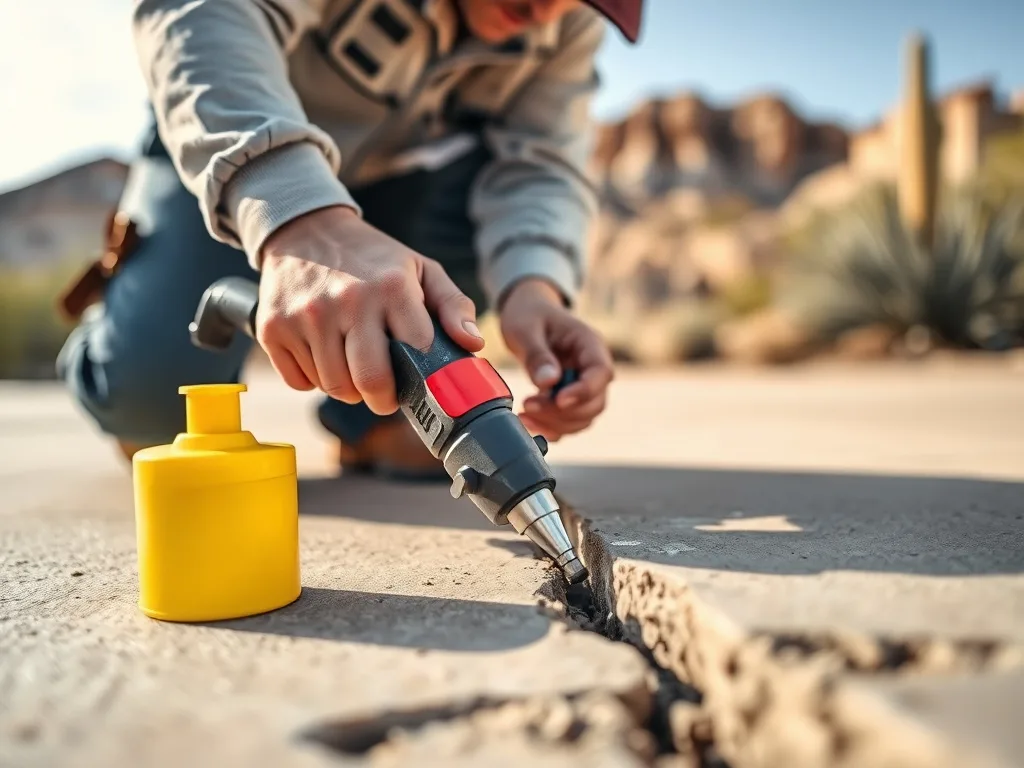
For sealing, we rout the crack into a clean channel, remove debris and loose material, and fill it with a flexible polyurethane or epoxy sealant that moves with the concrete's natural expansion and contraction instead of cracking again at the same line. Rigid fillers that don't flex are one of the most common reasons a 'fixed' crack reopens within a year in a climate with this much thermal swing.
For structural cracks, we may stitch across the crack with reinforcing pins or straps that hold the two slab sections from moving independently, then seal the surface. If the crack is a symptom of settlement rather than surface stress, we address the ground underneath first — with mudjacking or polyurethane lifting — so the same crack doesn't return in a different spot next monsoon season.
What crack repair costs
As an industry-typical range, routine crack repair runs about $150–$500 per crack, or roughly $15–$18 per linear foot for longer runs. Structural stitching and settlement-related repairs cost more depending on scope, but even at the higher end, catching a crack early is dramatically cheaper than the slab replacement — or the foundation work — that an ignored crack eventually forces.
Foundation-adjacent cracks or cracks with visible movement should be assessed sooner rather than later; see our foundation repair page for what to watch for on wall and footing cracks specifically.
Why timing matters in this climate
The best time to seal a crack is before the next monsoon, not after. Once water gets into an open crack and reaches the base course underneath, it accelerates exactly the swell-shrink cycle that opened the crack in the first place — and can start feeding settlement, not just surface cracking. Pre-monsoon inspections (April–May) and post-monsoon inspections (September–October) are the two windows we recommend most.
Get a crack repair estimate
Send photos of the crack — including a close-up showing width and any offset — plus your city, and we'll usually give you a ballpark before a site visit. Free on-site inspections across Tucson, Sierra Vista, Oro Valley, and the surrounding region.
Call 844-967-5247 or use the estimate form. If you've got more than one crack or a slab that's visibly settled, we'll scope the whole job in one visit.
Concrete Crack Repair FAQs
Straight answers before we drill
As an industry-typical range, routine crack sealing runs about $150–$500 per crack, or roughly $15–$18 per linear foot for longer runs. Structural stitching costs more, but even at the higher end it's far cheaper than the slab or foundation repair an ignored crack can eventually force.
Caliche hardpan under Tucson-area soil blocks water from draining downward, so a hard storm saturates the clay and silt sitting above it. That soil swells and pushes against the slab from below — the classic trigger for a crack that seemed stable all through the dry season to suddenly widen.
Hairline cracks under about 1/8 inch with no vertical offset between the two sides are usually cosmetic. Cracks wider than 1/4 inch, cracks with a visible step between sides, or cracks that keep reopening after sealing usually indicate settlement underneath and need a different fix — we assess this for free before recommending anything.
A flexible polyurethane or epoxy sealant that moves with the concrete's expansion and contraction will hold up far better than a rigid filler, which tends to crack again at the same line. If the crack is settlement-related rather than surface stress, we address the ground underneath too so the fix actually lasts through the next monsoon.
Sunken slab or cracked driveway? Get a real number this week.
Free estimates across Southern Arizona. Most residential jobs are quoted and scheduled within days, not weeks.