Foundation Repair — Southern Arizona
Foundation Repair Across Southern Arizona — Correct Settlement Before It Reaches the Structure
Doors that stick, floors that slope, and stair-step cracks in block walls are rarely random. In Southern Arizona they usually trace to the same cause — expansive clay swelling against a caliche hardpan, then shrinking again the next dry season.
Warning signs of foundation movement
Foundation problems rarely start with a dramatic crack. They usually start small: a door that used to close easily now sticks, a floor that develops a noticeable slope, a hairline crack near a window corner that slowly widens over a couple of monsoon seasons. Catching these early is the difference between a targeted repair and a major structural correction.
- Diagonal or stair-step cracks in block or stucco near corners
- Doors and windows that stick or won't latch properly
- A visibly sloping or uneven interior floor
- Cracks in the concrete slab that align with exterior wall cracks
- Gaps opening between the foundation and an attached patio or walkway
Why Southern Arizona foundations move seasonally
The Tucson basin's soil profile is the driver: a caliche hardpan layer, typically 2–4 feet down, sits over clay and silt that expands significantly when saturated and shrinks again once the region's long dry stretches return. Because caliche blocks water from draining straight down, monsoon runoff tends to pool and saturate that clay layer unevenly around a foundation's perimeter — swelling more on the side that collects more runoff, less on the side that sheds it.
That uneven swelling and shrinking is what produces the classic diagonal stair-step cracking pattern and the doors-that-stick symptom — the foundation is moving slightly, unevenly, on a seasonal cycle, not settling uniformly like it would on stable native soil.
In the foothills — Catalina Foothills, areas around Vail near the Rincon foothills — the soil story shifts. Decomposed granite and sandier fill are less prone to clay-swelling but more prone to settlement if the fill wasn't compacted thoroughly during original construction, which shows up as foundations that drop rather than heave.
How we diagnose the cause before recommending a fix
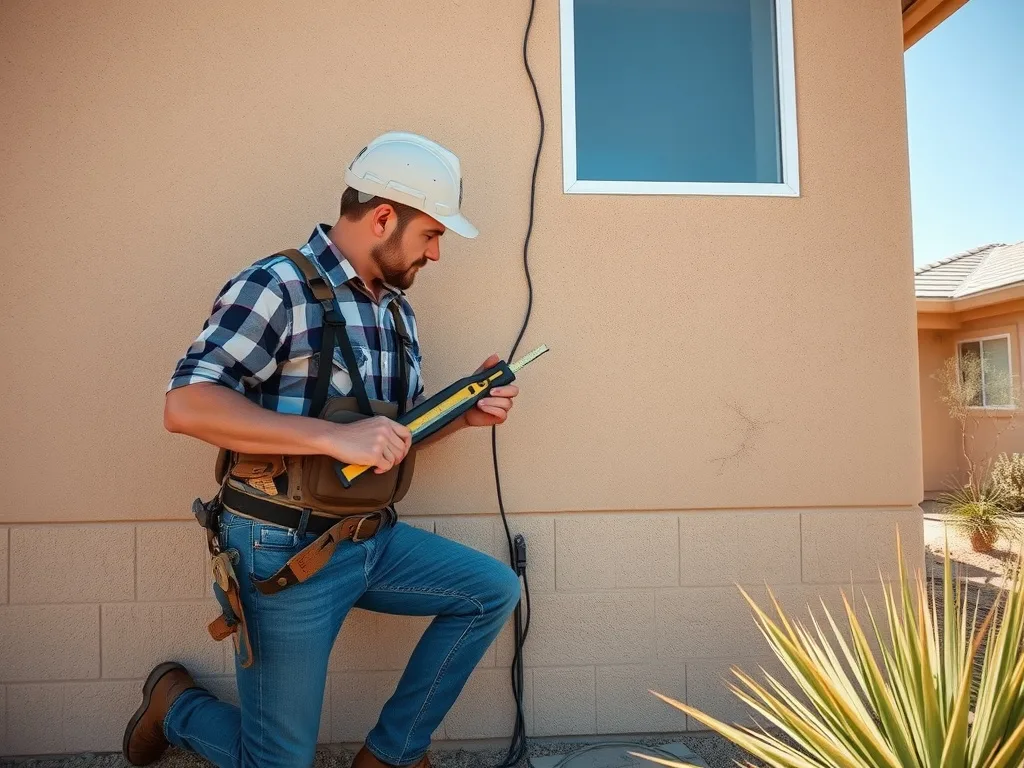
Not every foundation crack needs the same repair, and the wrong fix on a foundation actively moving from soil swelling can waste money without solving anything. We start with elevation readings around the foundation perimeter, a look at the crack pattern and whether it's active or stable, and an assessment of drainage — where monsoon water is currently going and where it's likely pooling against the foundation unseen.
That diagnosis determines the fix: sometimes it's correcting drainage and grading so water stops feeding the swell-shrink cycle; sometimes it's void-filling and stabilization under a settled slab or footing; and for genuinely structural movement, it's when we tell you honestly that the scope needs a geotechnical engineer, not flatwork repair.
What correction typically involves
For moisture-driven movement, correcting the drainage that's feeding uneven soil swelling is often the highest-leverage fix — regrading, extending downspouts and scuppers away from the foundation, and sealing cracks so monsoon water stops reaching the soil underneath. For settlement, we can stabilize void space beneath slabs and footings with the same polyurethane or mudjacking methods used on flatwork, scaled to foundation work.
We also seal and, where appropriate, structurally stitch foundation-adjacent cracks so they stop admitting water — see our crack repair page for how that process works on both cosmetic and structural cracks.
What foundation repair costs
As an industry-typical range, minor crack repair on a foundation runs about $250–$800; broader corrective work runs roughly $1.50–$12 per square foot depending on scope; and repairs involving active leaks or more significant structural correction typically fall in the $2,000–$12,000 range. Every quote is scoped from an on-site inspection — foundation work varies too much by cause to price from photos alone.
Addressing a foundation issue early — while it's still a hairline crack and a sticking door, not a visibly sloping floor — is consistently the cheapest version of this repair. The soil cycle that caused it doesn't stop on its own.
Get a foundation assessment
If you're seeing stair-step cracking, sticking doors, or a sloping floor, book a free on-site inspection. We'll walk the perimeter, take elevation readings, assess drainage, and give you an honest read on what's causing it — across Tucson, Sierra Vista, Green Valley, and the surrounding region.
Call 844-967-5247 or use the estimate form. If the scope is beyond flatwork repair, we'll tell you that up front and point you toward the right kind of engineer.
Foundation Repair FAQs
Straight answers before we drill
Most trace back to expansive clay soil swelling unevenly against a caliche hardpan layer after monsoon rain, then shrinking again during the region's long dry stretches. That seasonal swell-shrink cycle produces diagonal stair-step cracking and doors that stick, especially where drainage funnels more runoff toward one side of the foundation than another.
As an industry-typical range, minor crack repair runs about $250–$800, broader corrective work runs roughly $1.50–$12 per square foot, and repairs involving leaks or more significant structural correction typically run $2,000–$12,000. Every job is scoped on-site since causes and severity vary widely.
Not always — but a door that used to close easily and now sticks, especially alongside a hairline crack near a window or corner, is a common early sign of foundation movement worth having assessed. Catching it early keeps the fix small.
We handle drainage correction, crack sealing and stitching, and void-filling/stabilization under settled slabs and footings. For foundations with significant structural movement, we'll tell you honestly during the inspection and point you toward a geotechnical engineer rather than take on work outside that scope.
Sunken slab or cracked driveway? Get a real number this week.
Free estimates across Southern Arizona. Most residential jobs are quoted and scheduled within days, not weeks.