Monsoon-Proofing Your Southern Arizona Concrete: A Pre-Season Checklist
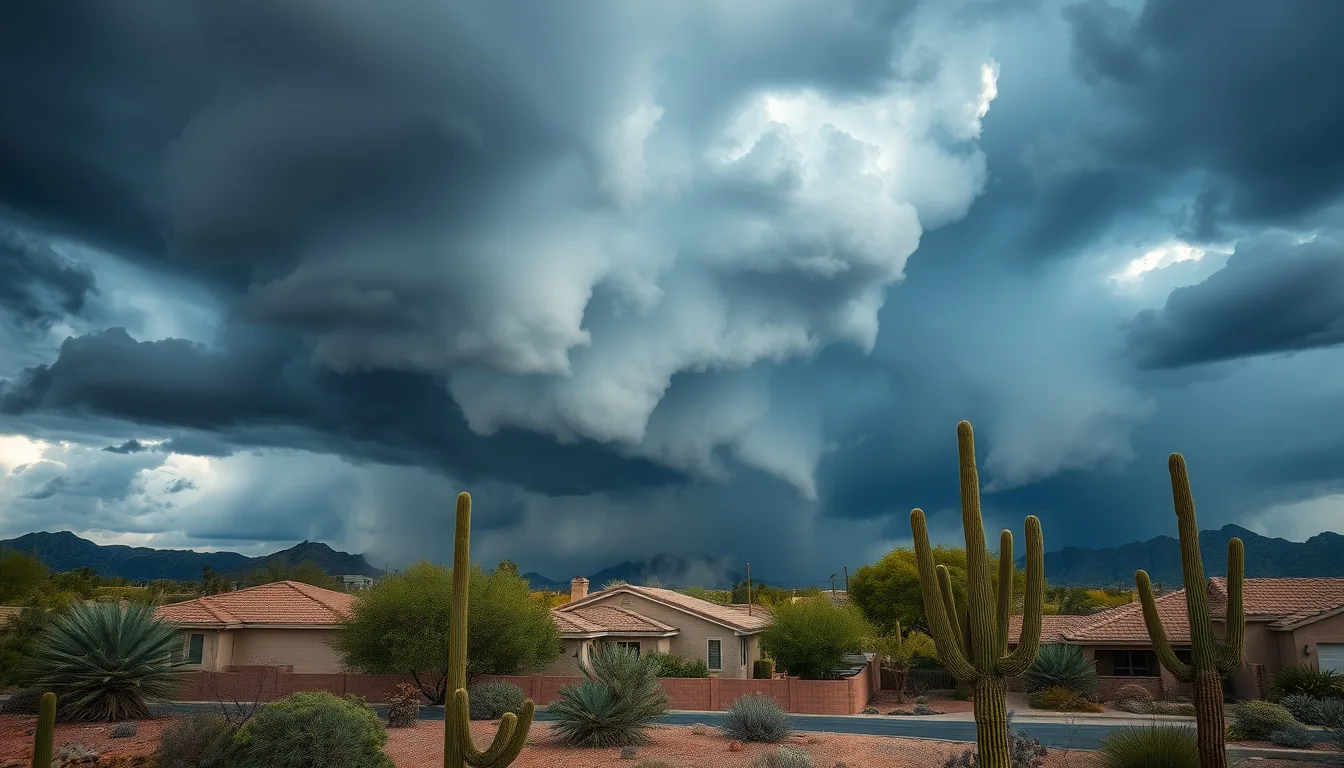
Arizona's monsoon season officially runs June 15 through September 30, and Tucson doesn't get the lighter version of it. The Tucson area averages roughly 5.95 inches of monsoon rain against Phoenix's 2.56 inches — more than double — arriving in short, intense, highly localized downpours that hit hardscape hard. A few weeks of prep in April and May routinely prevents the settlement and cracking calls we get every October.
Walk the property with these five checks
1. Seal open cracks before they widen
Any crack wider than a hairline is a path for monsoon water straight down to the caliche-and-clay layer that drives most Southern Arizona settlement. Sealing now, while the ground is dry, keeps this summer's storms from turning a small crack into a bigger repair. See our full crack repair guide for how to tell a cosmetic crack from a structural one.
2. Check that grading still slopes away from the house
Years of settlement can quietly flatten or even reverse a slab's original slope. Walk your driveway, patio, and walkways after a light watering (or wait for the season's first rain) and watch where the water actually goes. If it's pooling against the foundation or garage instead of running toward the yard or street, that's a drainage problem worth correcting before the real storms arrive.
3. Inspect scupper and downspout discharge points
A roof scupper or downspout that dumps directly onto a patio or driveway edge concentrates a huge volume of water into a small area during a monsoon burst — exactly the kind of localized saturation that erodes base material and opens voids under a slab. Extending discharge points away from concrete edges is one of the cheapest, highest-leverage fixes on this list.
4. Look for early settlement signs at joints and slab edges
A control joint that's started to show a slight lip, or a slab corner that sounds hollow when tapped, is often the first sign of a void forming underneath — before it's visible as a real drop. Catching it now, before a summer of monsoon saturation grows the void further, is a much smaller repair than waiting until fall.
5. Check foundation-adjacent cracking and any doors that stick
If you've noticed a door sticking more than it used to, or a stair-step crack near a corner that seems to have grown since last year, get it assessed before monsoon season adds another cycle of swelling clay to the problem. See our foundation repair guide for what these signs typically mean.
Why "before June 15" actually matters here
Once the monsoon starts, storms arrive with little warning and hit hard — a single afternoon downpour can deliver a significant share of the season's total rainfall in under an hour. That doesn't leave much of a window to address a drainage problem or an open crack once the season is underway. April and May, while the ground is still dry and stable, is the realistic window for inspections and preventive repairs.
After the season: the other half of the checklist
September and October are when the summer's cumulative damage shows up — new settlement, widened cracks, eroded base material at slab edges. A post-monsoon inspection catches what the pre-season checklist didn't prevent, and closes the loop before the next dry season sets whatever moved.
If you're not sure whether something on this list needs a professional look, send us photos and your city — most of what's on this checklist is a quick, free assessment before it becomes an expensive one.
Ready for a real number?
Free estimates across Southern Arizona — assessed on site, fixed price before any work starts.